A Beginner’s Guide to Stretching at Home for Better Flexibility
Stretching is a simple yet powerful way to enhance your physical health and overall sense of well-being. Whether you’re looking to improve flexibility, prevent injuries, or simply relax after a long day, incorporating stretching into your daily routine can make a significant difference. The best part? You don’t need a gym or fancy equipment—just a little space at home and a few minutes of your time.
In this beginner’s guide, we’ll explore why stretching matters, how to get started safely, and some easy stretches you can try right away.
Why Stretching Matters
Stretching benefits your body in many ways:
– Improves flexibility: Increased range of motion helps with everyday movements and physical activities.
– Reduces muscle tension: Stretching can relieve tightness and stiffness from sitting or repetitive motions.
– Enhances posture: Regular stretching helps balance muscle groups, which supports good posture.
– Promotes relaxation: Stretching releases tension and encourages mindfulness, easing stress.
– Prevents injury: Keeping muscles flexible reduces the risk of strains during exercise or daily tasks.
When and Where to Stretch at Home
You can stretch anytime—after waking up, during breaks, or before bed. Many people find stretching after exercise is especially helpful to cool down muscles.
Choose a quiet, comfortable spot at home where you have enough room to move freely. Use a yoga mat or soft carpet to cushion your joints.
Tips for Safe and Effective Stretching
To get the most from your stretching routine and avoid injury, keep these tips in mind:
– Warm up first: Stretching cold muscles can cause injury. Try a brief warm-up like walking in place or gentle arm swings for 3-5 minutes.
– Breathe deeply: Focus on slow, steady breathing to support relaxation.
– Don’t bounce: Avoid bouncing or jerking movements during stretches; hold steady and smooth positions.
– Stretch to mild tension: You should feel a gentle stretch, not pain. Ease off if you feel discomfort.
– Hold each stretch: Aim for 15-30 seconds per stretch, repeating 2-3 times if possible.
– Stretch both sides: Ensure you stretch both the left and right sides of your body evenly.
Beginner Stretching Routine to Try at Home
Here’s a simple full-body stretching routine suitable for beginners:
1. Neck Stretch
– Sit or stand tall with shoulders relaxed.
– Slowly tilt your head toward your right shoulder until you feel a gentle stretch on the left side.
– Hold for 20 seconds, then switch sides.
– Repeat twice on each side.
2. Shoulder Rolls
– Stand with feet shoulder-width apart.
– Roll your shoulders forward in a circular motion 10 times.
– Reverse direction and roll backward 10 times.
– This helps release tension in the upper back and shoulders.
3. Chest Opener
– Clasp your hands behind your back.
– Straighten your arms and lift your chest while squeezing your shoulder blades together.
– Hold the stretch for 20-30 seconds.
– Release and repeat if desired.
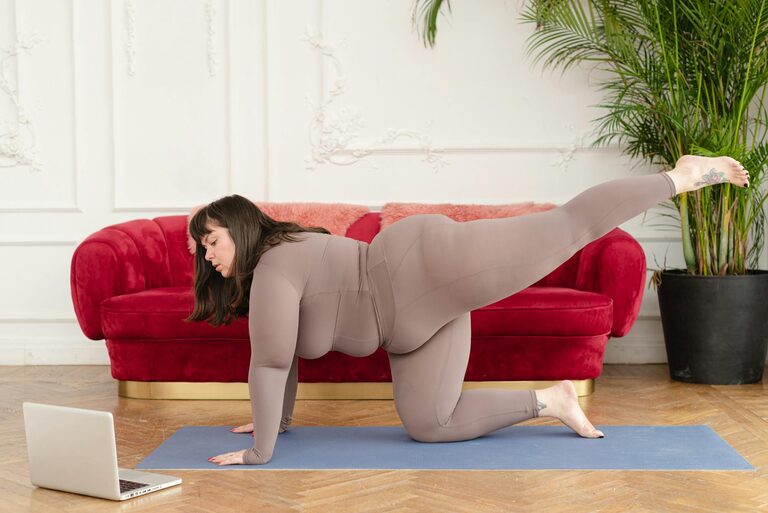
4. Cat-Cow Stretch (Spinal Mobility)
– Get on hands and knees with wrists below shoulders, knees below hips.
– Inhale, arch your back and lift your head and tailbone (Cow).
– Exhale, round your spine, tuck your chin, and tailbone (Cat).
– Repeat 8-10 times in a smooth, flowing motion.
5. Seated Hamstring Stretch
– Sit on the floor with one leg extended straight.
– Bend the other knee, placing the sole against the inner thigh.
– Reach toward the toes of the extended leg, keeping your back straight.
– Hold for 20-30 seconds, then switch legs.
6. Standing Quadriceps Stretch
– Stand tall with feet hip-width apart.
– Bend your right knee and hold your right ankle with your right hand.
– Keep knees close together and push your hips forward slightly.
– Hold for 20 seconds, then switch legs.
7. Calf Stretch
– Stand facing a wall, placing your hands on it for balance.
– Step your right leg back, keeping it straight with the heel on the floor.
– Bend your left knee slightly and lean into the wall.
– Hold for 20-30 seconds, then switch legs.
Making Stretching a Habit
Consistency is key when it comes to flexibility. Try to stretch at least 3-4 times per week to notice improvements. Set reminders on your phone or incorporate stretching into existing routines such as morning wake-ups or bedtime wind-downs.
Extra Tips for Staying Motivated
– Play calming music to make stretching more enjoyable.
– Invite a family member or friend to join you.
– Track your progress by noting improvements in flexibility or reduced muscle tightness.
– Celebrate your small wins and be patient with your body.
Final Thoughts
Stretching is a gentle, accessible way to care for your body every day. By dedicating a few minutes each day to simple stretches, you can improve your mobility, reduce discomfort, and bring more ease into your daily movements. Remember to listen to your body, stay consistent, and enjoy the process of becoming more flexible and relaxed right in the comfort of your own home.